The opener is the part of the system everyone thinks about and the part that causes the least of the work — when the door is right, almost any decent opener steers it for years; when the door is wrong, no opener survives it. Still, when replacement time comes, the choices matter. Here’s the honest guide, tuned for a county where the lightning rolls in with the monsoons and the garage ceiling bakes all summer.
Chain vs. belt vs. wall-mount
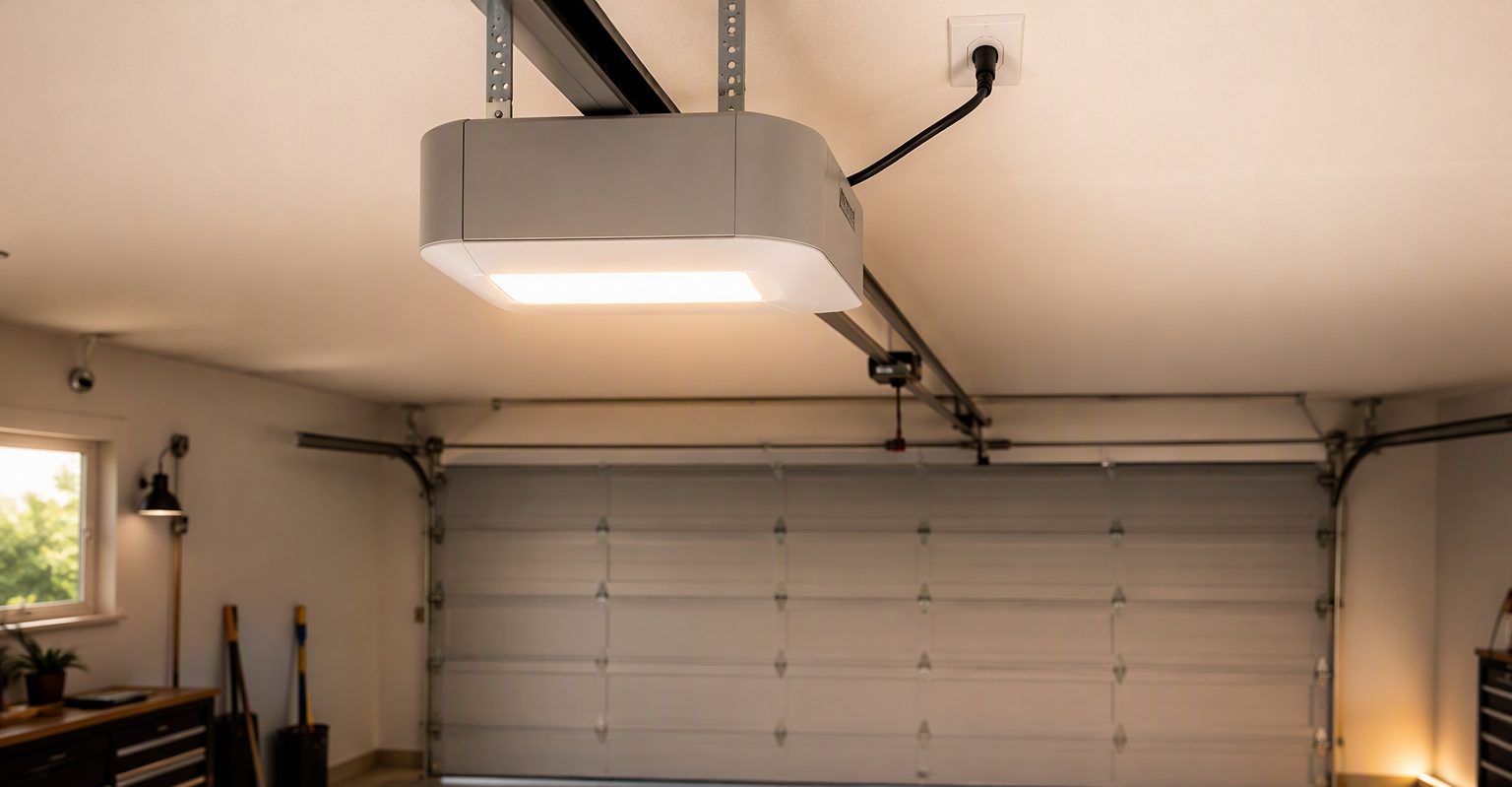
Chain drive is the workhorse — durable, inexpensive, and loud enough to announce a teenager’s curfew. For a detached garage, it’s often all you need. Belt drive swaps the chain for a reinforced belt: same reliability, a fraction of the noise — the standard choice for attached garages under bedrooms. Wall-mount (jackshaft) units bolt beside the door and free the ceiling entirely — great for high-lift setups and garages where the ceiling earns its keep, at a premium price. For most Prescott-area homes the answer is belt if it’s attached, chain if it’s detached.
Horsepower: less dramatic than the box suggests
A properly balanced door weighs almost nothing to lift — the springs do the work, the opener steers. Half-horsepower handles most standard doors; three-quarter suits heavy insulated or carriage doors. What matters more than the number is the match: an opener sized to your door’s actual weight, with force and travel set during install. An overpowered opener on a bad door isn’t strength — it’s a louder way to break gears.
Battery backup: the monsoon feature
Every summer, monsoon cells knock power out in pockets across the county — and an opener without battery backup turns an outage into learning the manual release in the dark, in the rain, with the car outside. Battery backup keeps the door working through the flickers and the hours-long outages alike. In a county where the sky opens up a few evenings a week in July, it’s the feature that pays for itself the first monsoon night the lights drop.
The features worth having (and the ones that aren’t)
Worth it: rolling-code security (standard now, non-negotiable), soft start/stop (easier on the whole system), and a good light — the opener is the garage’s main light source. Wi-Fi and smartphone control are genuinely useful — did-I-close-it checks from the driveway, alerts when the door moves, letting a neighbor in without a keypad code. Skip-if-you-like: built-in cameras and premium app ecosystems, unless you’ll actually use them. The motor and the rail are the opener; everything else is a preference.
Heat, lightning, and the logic board
Two Arizona-specific killers live up at the motor head. First, lightning: monsoon storms send surges down the lines every season, and the opener’s logic board is the usual casualty — both remotes dead at once after a storm is the classic signature. Second, heat: a garage ceiling under an Arizona roof sees temperatures that shorten electronics’ lives, which is one reason cheap units die young up here. Neither is a reason to panic — boards are replaceable on young units — but both are reasons the diagnosis matters before the money moves.
The sensors: small parts, big authority
The photo-eyes at the floor reverse the door when the beam breaks — the safety system that’s protected fingers and bikes for decades. They’re also a real share of every week’s service calls: bumped by a trash can, knocked by a bike, hazed by dust after a haboob blows through. If your door reverses at the floor or refuses to close, check for blinking sensor lights before anything else — a gentle realignment is the one opener fix that’s genuinely DIY. Anything deeper — gears, boards, wiring — is a service call, and most of it is smaller than homeowners fear.
When repair beats replacement
A stripped gear kit on a solid mid-life unit: repair, a fraction of replacement cost. A dead logic board after a surge: repair if the unit is young, replacement math if it’s past ten. Sensor alignment: minutes. The line we use: if the unit has years left and the part is small, fix it; if it’s at end of life and the repair buys you a year, put the money toward the replacement you’ll need anyway. You’ll get both numbers in writing — the decision is yours, made with real figures.