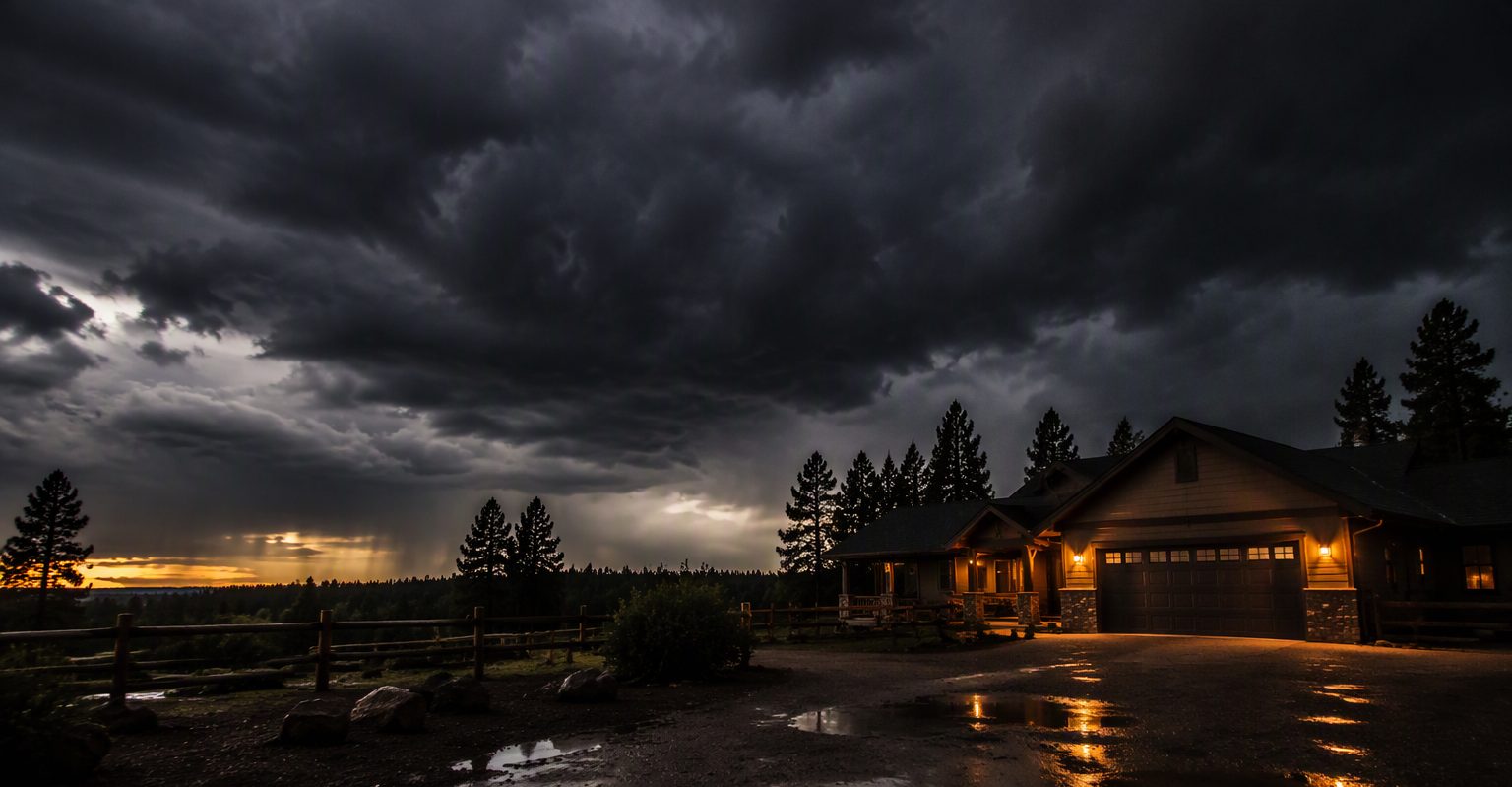
Anyone who’s ridden out a real monsoon cell over Yavapai County knows what a microburst does to a neighborhood — and garage doors are among the first things the wind finds. A sixteen-foot span of thin steel is a sail; a limb through a section is a hole in the house’s largest opening. When the thunder fades and the door’s the casualty, the first hours matter. Here’s the order.
Hour one: safety and evidence
Stay clear of a door that’s hanging crooked or off its track — gravity is holding it, and it’s heavier than it looks. Kill nothing but the opener’s power if the door’s damaged; don’t press the button to “see if it works,” because a shoved door on a live opener turns track damage into section damage. Then photograph everything before touching it: the door, the tracks, the limb or debris, the interior side, wide shots and close-ups. That file is the spine of the insurance claim, and it only exists if you make it before cleanup starts.
The three kinds of monsoon damage
Impact damage is the obvious one — a limb through a section, wind-blown debris denting panels. The good news: a single section on a current-model door is replaceable, and the fix is often a section swap rather than a door. Track damage is the sneaky one — a microburst gust shoves the door sideways, bends tracks, and pops rollers; it looks worse than it usually is, because tracks are replaceable and the door often survives intact. And wind-pressure damage is the structural one: a door bowed or blown in by pressure differential, which usually means replacement — and a conversation about wind-rated doors for the next one.
The stuck-open emergency
The scenario that can’t wait: the door is damaged open — sections torn, track destroyed, the opening exposed. That’s not a repair queue problem; it’s an open-house problem, and it’s what the 24/7 line is for. The emergency visit secures the opening first — the door down and locked, or the opening boarded if the door can’t close — and the permanent repair follows on the earliest slot. You sleep in a closed house; the door gets fixed in daylight; one written price covers both.
The lightning subplot
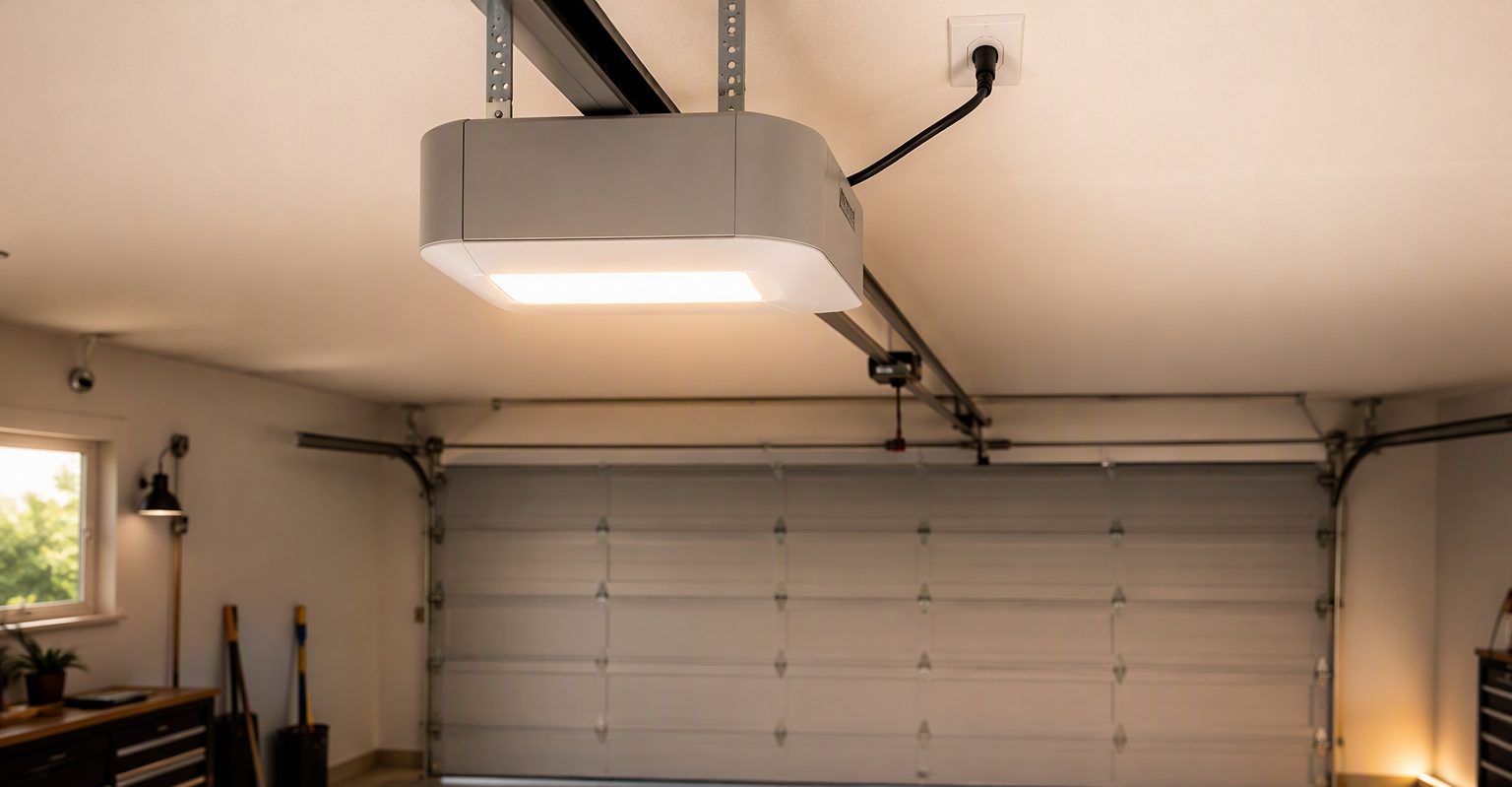
Monsoon season’s smaller casualty: the opener’s logic board, killed by the surge when lightning finds the lines. If the door’s fine but the opener’s dead after the storm — both remotes out at once, or a unit that’s dark entirely — suspect the board. It’s a repair on a young unit, replacement math on an old one. And if you’re manually opening the door through an outage: pull the red release with the door DOWN, lift evenly, and re-engage when the power’s back.
The dust after
Even when the door survives the wind, the haboob that rode in with it leaves a deposit: grit packed into tracks, roller bearings, and hinges. A door that got loud or rough after a dust storm usually isn’t broken — it’s dirty in the wrong places. Tracks wiped clean and dry, moving steel re-lubricated, and the door usually goes quiet again. It’s the smallest-bill recovery on this page, and the most skipped.
The claim side, briefly
Monsoon damage to the garage door is typically a homeowners claim — wind and impact, sudden and documented. File promptly, describe plainly what the storm did, and let the photos and the written scope do the talking. The repair quote itemizes parts and labor line by line, which is exactly the format adjusters reconcile fastest. After a county-wide cell, boards fill in the order the calls come in — the early call gets the early slot, for the repair and the claim alike.