Every year it’s the same pattern across the mile-high communities: the first hard freeze settles in, and the phones light up with snapped springs. It’s not coincidence — it’s metallurgy and moisture, and both are beatable in the fall for a fraction of what January charges. Here’s why winter kills garage doors at 5,400 feet, and the routine that keeps yours off the casualty list.
Why springs snap on the coldest mornings
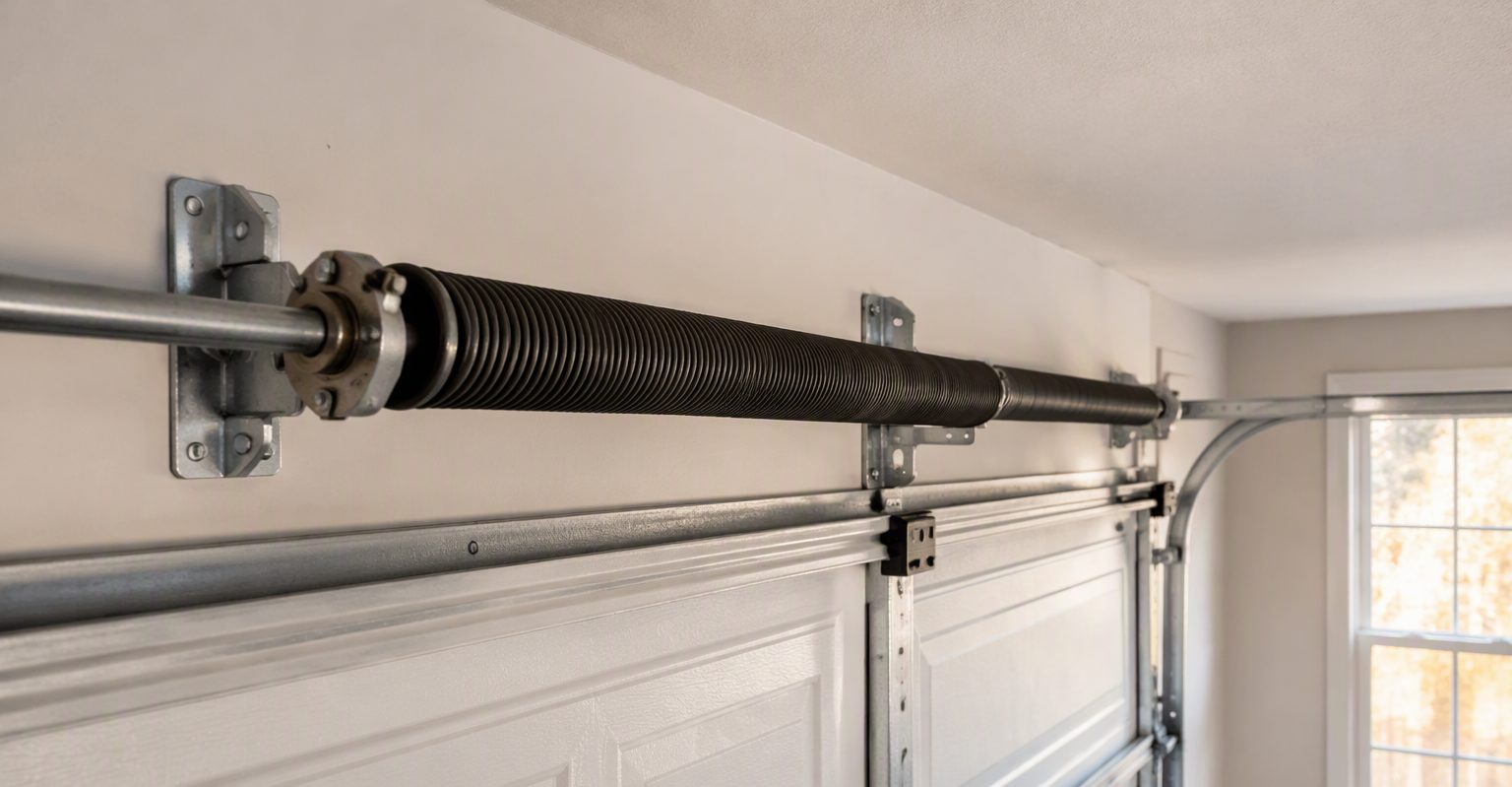
Steel contracts in the cold — and a torsion spring is a long ribbon of steel wound tight. A spring at ninety percent of its cycle life has micro-cracks working through it; the first sub-freezing high-desert morning makes the metal brittle, adds contraction stress to the load, and finds the crack. That’s why the bangs cluster in January cold snaps: the spring was dying all fall, and the winter morning was just the appointed hour. The November move is the balance test — door released, lifted to waist height, holds or drifts. A drifting door has springs at the line, and a planned fall swap beats an emergency January call every single time.
The iced-to-the-driveway problem
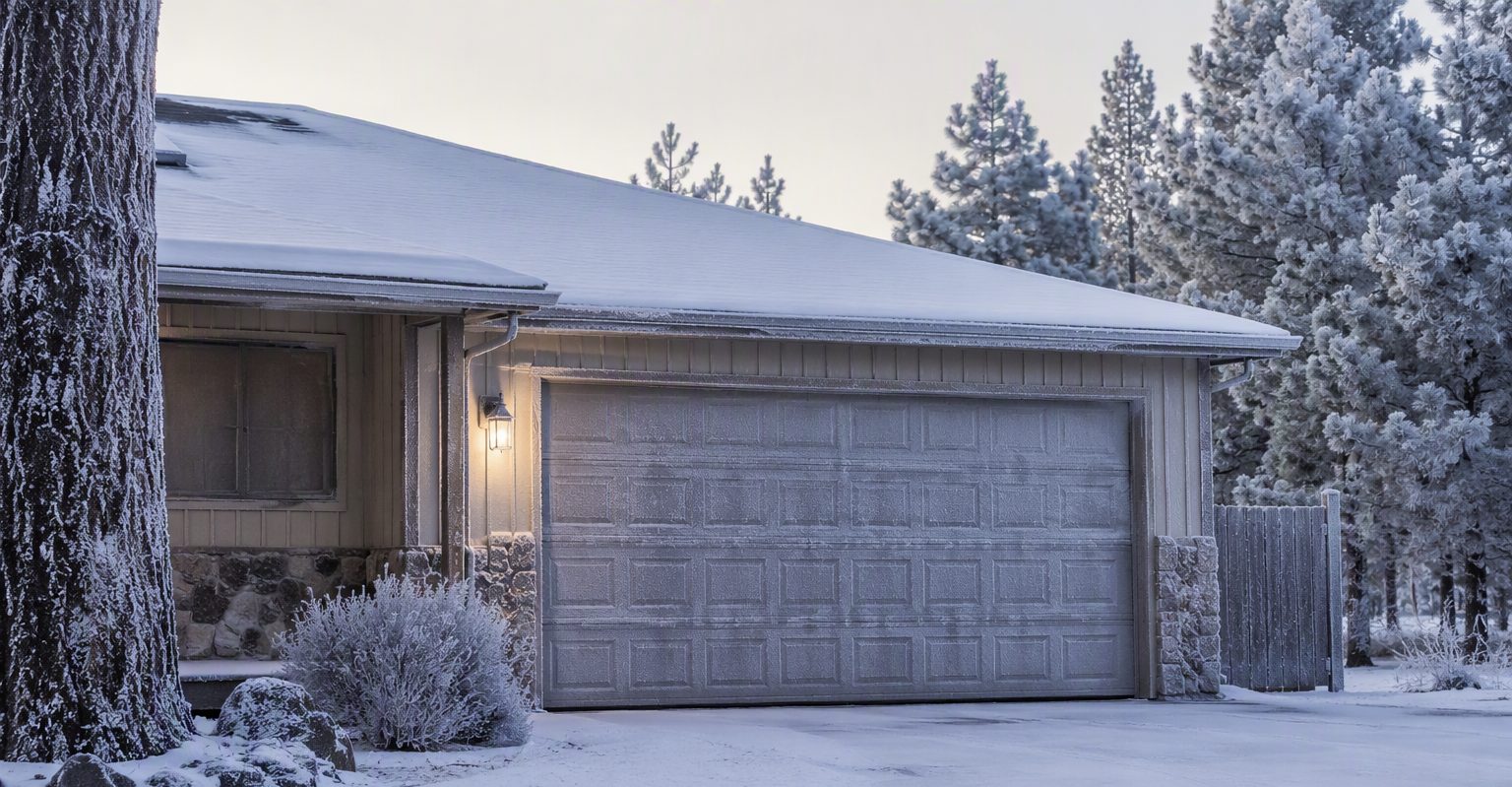
The bottom seal meets wet pavement — monsoon season leaves the moisture, a snow shower refreshes it — overnight it freezes, and the morning press of the button asks the opener to dead-lift a door that’s glued to the ground. Best case: the seal tears. Worst case: the opener strips its gears or the top section bends at the arm. The prevention is the fall seal check — a cracked or sun-cooked bottom seal holds water against the door; a good one sheds it. If the door does freeze down: don’t force it. Warm water along the seal line or a de-icer, a gentle lift, and the opener re-engaged after it’s free.
Lubrication: the cold changes the rules
Grease that’s fine in July turns to paste on a ten-degree January night, and a paste-lubed door drags like a brake. The fall session uses cold-rated lubricant — silicone or garage-door-rated spray — on the roller stems, hinges, and spring coils, and wipes anything gummy that summer attracted. The tracks stay dry: clean of dust and grit, never lubricated. A door that rolls free in the cold is a door whose opener never has to strain — and opener gears are the second casualty of every cold snap, right behind springs.
The weatherstrip envelope
The garage shares walls with the house; the door is the envelope’s biggest hole. The bottom seal, the jamb weatherstrip, and the threshold are what stand between January and the laundry room. Fall is the check: seals cracked, flattened, or shrunk away from the jambs get replaced — a small-money fix that shows up on the heating side all winter. While you’re there: the door sections themselves. If the garage is a freezer and it shares a ceiling with a bedroom, an insulated door is the conversation to have — winters at this elevation are the reason insulation tiers exist.
Storm prep: the outage and the opener
Winter storms knock power out in pockets across the county every season — and up here, an outage in January is a different animal than one in July. Two fall moves: know where the manual release is and how it works (door DOWN before you pull it — a released door with weak springs comes down hard), and if the household depends on the garage as the main entrance, battery backup on the opener is the feature that earns its keep the first storm night the power drops. While you’re at the motor head: check that both sensor lights are solid — tracked-in moisture and dust film fog the lenses, and a blinking sensor is a door that won’t close in a snow shower.
The fall checklist, all in one place
Balance test (holds at waist height). Lubricate moving steel with cold-rated spray. Bottom seal and weatherstrip inspection. Tracks cleaned, never lubed. Sensor lights solid. Manual release rehearsed. Thirty minutes, once, before the cold — against the two failures that define January in the pines: the snapped spring and the door that’s iced shut with the car inside. The doors that survive mile-high winters aren’t lucky. They’re prepped.